By Vicky Wu | 13 March 2026 | 0 Comments
The Future of Connectivity: How 5G, AI and Wireless Broadband Are Transforming Global Internet Acces
The global telecommunications industry is entering a new stage of transformation as advanced 5G networks, artificial intelligence, and digital platforms reshape the way people and businesses connect to the internet.
This shift was a central theme at the MWC26 Barcelona, the world’s largest connectivity event organized by the GSMA. Industry leaders, operators, and technology companies gathered to discuss how next-generation networks will support the next decade of digital growth.
According to the GSMA Mobile Economy 2026 report, mobile technologies and services generated $7.6 trillion in economic value in 2025, representing 6.4% of global GDP. By 2030, this figure is expected to reach $11.3 trillion, highlighting the critical role mobile connectivity plays in the global digital economy.
In 2025 alone, the mobile ecosystem connected 5.8 billion people worldwide and supported over 50 million jobs, demonstrating how mobile infrastructure has become a foundation for modern economies.
The Global Expansion of 5G Networks
One of the most important drivers of this transformation is the rapid global deployment of 5G networks.
According to the GSMA, 57% of global mobile connections will run on 5G by 2030, making it the dominant mobile technology worldwide. At the same time, legacy networks such as 2G and 3G will shrink to just 1% and 5% of global connections respectively as operators accelerate network upgrades.
Telecom operators are investing heavily to support this transition. Between 2025 and 2030, global operators are expected to invest approximately $1.2 trillion in network infrastructure, including 5G standalone (SA) deployments, cloud-native networks, and advanced digital platforms.
These investments are enabling faster speeds, lower latency, and more reliable connectivity for consumers, businesses, and governments.
The Rise of AI-Driven Networks
Another major theme highlighted at MWC26 is the growing role of artificial intelligence in telecommunications.
The industry is rapidly shifting from traditional connectivity services toward AI-powered digital platforms that integrate cloud computing, data analytics, and automation.
AI is already being used to:
- Optimize network performance
- Improve traffic management
- Enhance cybersecurity protection
- Automate network operations
As networks become more software-defined and AI-enabled, telecom operators are also facing increasing security challenges. Industry reports estimate that the global cost of cybercrime could rise from $9.22 trillion in 2024 to $15.63 trillion by 2029, making digital security a critical priority for the telecommunications sector.
Bridging the Global Connectivity Gap
Despite the rapid expansion of mobile networks, a significant digital divide still exists.
Although 96% of the global population now lives within coverage of mobile broadband networks, more than 3 billion people remain offline. This gap is largely due to affordability, infrastructure limitations, and lack of access to reliable broadband services.
In many developing regions—including parts of Latin America, Africa, and Southeast Asia—deploying fiber infrastructure can be expensive and time-consuming.
This is where wireless broadband technologies such as 4G LTE and 5G Fixed Wireless Access (FWA) are becoming increasingly important.
Wireless broadband allows users to access high-speed internet simply by inserting a SIM card into a wireless router, enabling connectivity without complex installations or expensive infrastructure.
The Growing Role of CPE Routers in Wireless Broadband
As mobile broadband networks expand, Customer Premises Equipment (CPE) routers are becoming essential devices that bridge cellular networks and local WiFi connectivity.
A 4G or 5G CPE router can convert cellular signals into stable WiFi or Ethernet connections, allowing homes and businesses to quickly deploy broadband access.
These devices are widely used in scenarios such as:
- Home broadband replacement
- Small and medium-sized businesses
- Remote offices and construction sites
- Smart surveillance systems
- Rural and underserved areas
In many markets, especially where fiber coverage is limited, 5G Fixed Wireless Access is emerging as one of the fastest-growing broadband solutions, making CPE routers a key component of the modern connectivity ecosystem.
Enterprise Connectivity and the Growth of IoT
Another major driver of demand for wireless routers is the rapid expansion of enterprise connectivity and the Internet of Things (IoT).
Businesses across industries are deploying connected devices and smart systems to improve efficiency and automate operations.
Typical applications include:
- Smart security and video surveillance
- Smart factories and industrial automation
- Retail branch connectivity
- Logistics and transportation monitoring
- Smart buildings and energy management
Reliable wireless connectivity is critical for these applications, and 4G/5G CPE routers provide a flexible and cost-effective solution for connecting devices and networks.
Enabling the Future of Wireless Connectivity
As 5G standalone networks, AI-driven operations, and next-generation digital services continue to expand, demand for reliable wireless access devices will only continue to grow.
High-performance 4G and 5G CPE routers allow service providers, system integrators, and enterprises to quickly deploy broadband connectivity in environments where traditional wired infrastructure is not practical.
For telecom operators, ISPs, and distributors, investing in advanced wireless networking equipment is essential to support the next phase of global digital transformation.
Conclusion
The telecommunications industry is entering a new era defined by 5G, artificial intelligence, and digital platforms.
With billions of users connected and trillions of dollars in economic value generated each year, mobile connectivity has become one of the most important infrastructures in the global economy.
As wireless broadband continues to expand and 5G networks become the dominant technology worldwide, 4G and 5G CPE routers will play an increasingly critical role in delivering fast, flexible, and reliable internet access.
For businesses looking to deploy wireless broadband solutions, choosing the right connectivity hardware will be key to unlocking the full potential of next-generation networks.
At Shanghai SmileMbb Technology Co.,LTD, we provide high-performance 4G and 5G CPE routers designed to deliver stable connectivity for homes, enterprises, and broadband providers worldwide.
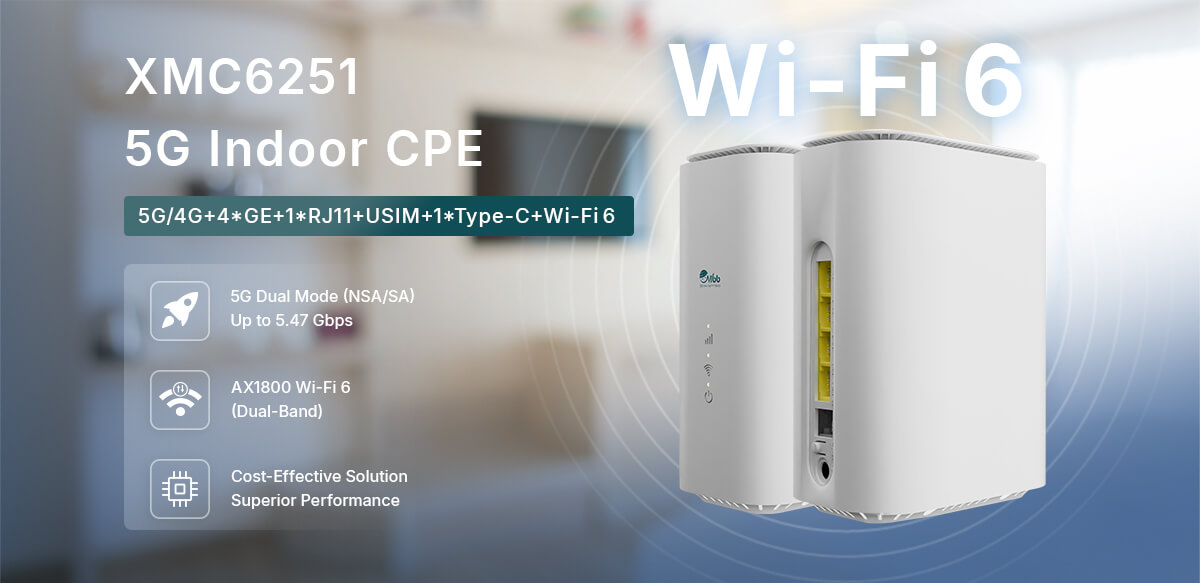
One of our latest solutions, the XMC6251 5G CPE Router, is designed to support high-speed wireless broadband with reliable performance, making it an ideal choice for ISPs, system integrators, and enterprises looking to deploy next-generation connectivity solutions.
One of our latest solutions, the XMC6251 5G CPE Router, is designed to support high-speed wireless broadband with reliable performance, making it an ideal choice for ISPs, system integrators, and enterprises looking to deploy next-generation connectivity solutions.
Component Prices Are Rising — Acting Early in 4G/5G CPE May Secure Better Market Position
Home 5G CPE vs Traditional Router: Why Operators Prefer CPE
Leave a Reply
Your email address will not be published.Required fields are marked. *